 NoiseGauge
How to measure and document a noisy neighbor
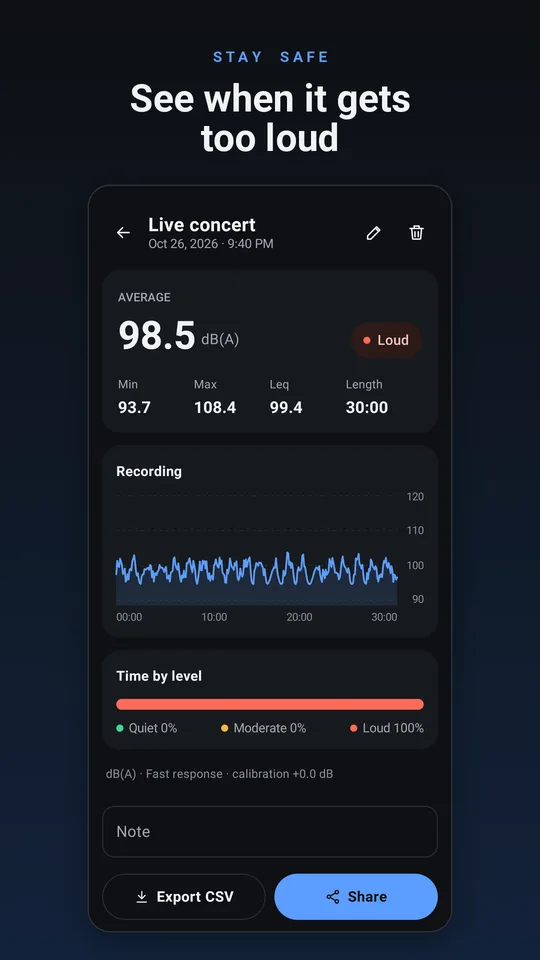
Write down when the noise happens, measure how loud it is against the normal background in the same room, and do it on several nights. A phone reading isn't legal proof, but a clear diary with numbers is what landlords and city noise officers ask for before they come to measure with a certified meter.
1. Check the rules where you live
Noise rules are local. Many cities and leases set quiet hours (often around 10 p.m. to 7 a.m.) and some give limits in dB(A) at your property line or inside your home. Search your city or county name with "noise ordinance", and read your lease or HOA rules. Knowing the hours and limits tells you what to measure.
2. Talk first, if it's safe
Many neighbors don't know how far their sound carries, especially bass. A friendly note with the times it bothers you solves more problems than any measurement. Keep a copy of what you sent.
3. Keep a noise diary
For each episode note the date, start and end time, what it was (music, footsteps, a dog, a party), which room you heard it in, and how it affected you (couldn't sleep, woke the baby). Two weeks of entries make a far stronger case than one angry night.
4. Measure it properly
- Measure where you hear it, usually the bedroom or living room, with windows and doors as they normally are.
- Put the phone down on a table or shelf, microphone uncovered, away from your own fridge, fan or TV. Don't hold it.
- Measure the background too. Record a quiet evening for comparison. The difference between the event and the normal background is what matters. A 10 dB rise sounds about twice as loud.
- Record during the noise for at least several minutes, and over whole nights if it happens late.
- Use dB(A), and add dB(C) for music. Bass through walls shows up much more in dB(C). If C is 10–15 dB above A, say so: it explains why the noise bothers you even when dB(A) seems moderate.
5. Read the numbers
- Leq: the energy average over the recording, the number most rules use.
- L90: your normal background. Compare quiet nights with noisy ones.
- Max and peak: the loudest moments, such as a door slam or a bass drop.
- The chart: shows when it started and stopped. Match it with your diary.
6. Take it further
If talking doesn't help, send your diary and summaries to your landlord, building manager or HOA. For ongoing problems, contact your city's noise or environmental health office or the police non-emergency line. They decide whether to measure with a certified meter. Your phone readings show a pattern; they aren't a substitute for an official measurement, and you shouldn't present them as one.
What doesn't help
- Recording or filming your neighbors. Audio recordings of other people can break privacy laws in some places. A sound level meter measures levels without recording any audio.
- Single readings without times or background levels.
- Making noise back.
Phone microphones aren't certified sound level meters. Readings are estimates; see our terms.