 NoiseGauge
How quiet should a bedroom be for good sleep?
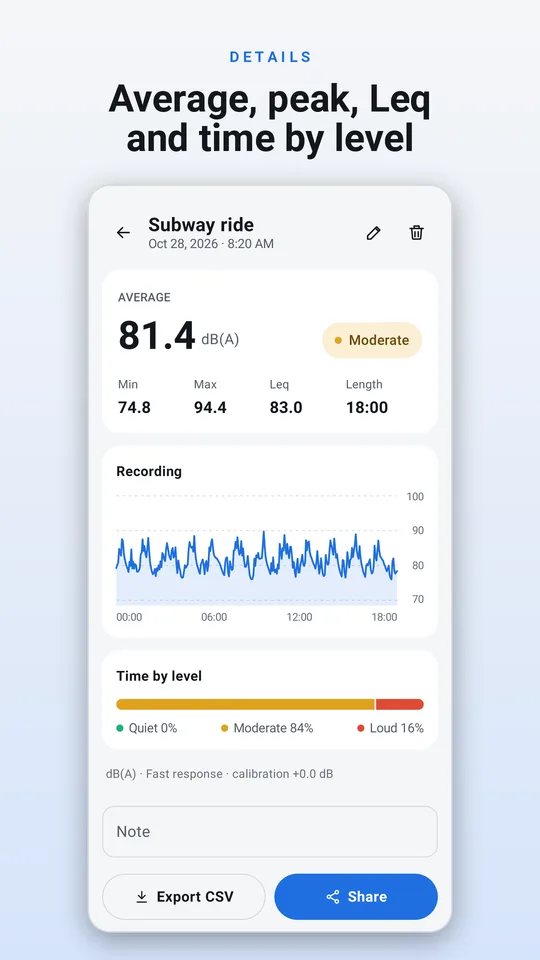
For undisturbed sleep, the World Health Organization's guidelines suggest a bedroom average of about 30 dB(A) for steady noise, with individual noise events, such as a passing truck or a door, staying below about 45 dB(A). Most sleep problems come from those short events, not the average, so measure a full night and look at the peaks.
What the numbers mean
- 30 dB(A) is a quiet bedroom: a soft whisper or rustling leaves.
- 40 dB(A) on average is noticeable. A refrigerator hum or distant traffic. Many people sleep fine, light sleepers may not.
- Events above 45 dB(A), repeated more than 10–15 times a night, are linked to more awakenings and poorer sleep, even if you don't remember waking.
Outside, the WHO's European night noise guidance recommends road and rail noise stay below about 40–45 dB at the façade at night. A closed window typically cuts around 25 dB.
How to measure a whole night
- Place the phone on the nightstand or a shelf near your head, microphone facing the room, not under a pillow or in a case pocket.
- Plug it in and turn on Do Not Disturb so notifications don't add noise.
- Keep the room as usual: same windows, fans and devices as a normal night.
- Record from bedtime to wake-up. Android only lets apps use the microphone in the background with a visible notification, so use an app that supports background or scheduled recording, or keep the app on screen.
- Repeat on 2–3 nights, including a weekend if neighbors or nightlife are the issue.
Reading the night
- Leq: the overall level. Compare it with 30 dB(A).
- L90: the constant background, such as a fan, the fridge or HVAC. If it's high, the fix is in the room.
- Max, peak and L10: the events. Use the chart to see when they happen. A pattern at 1 a.m. on weekends points somewhere different than one every 10 minutes all night.
- dB(C) versus dB(A): if a second recording in dB(C) is much higher, low-frequency noise (traffic rumble, bass, machinery) is involved. That travels through walls and windows more easily.
Fixes, cheapest first
- Find the background sources: move or service a buzzing fridge, a loud fan or a charger that whines.
- Seal gaps around windows and doors; a door sweep helps a lot for hallway noise.
- Soft furnishings: heavy curtains, a rug and a padded headboard reduce echo and some outside noise.
- Earplugs cut 20–30 dB when inserted correctly.
- Masking sound: steady white or pink noise hides short events. Keep it moderate. For babies, pediatricians suggest keeping sound machines at about 50 dB(A) or less and placed away from the crib.
- Bigger fixes: secondary glazing or acoustic windows on the noisy side, or swapping bedrooms.
Phone microphones aren't certified sound level meters. Readings are estimates; see our terms.